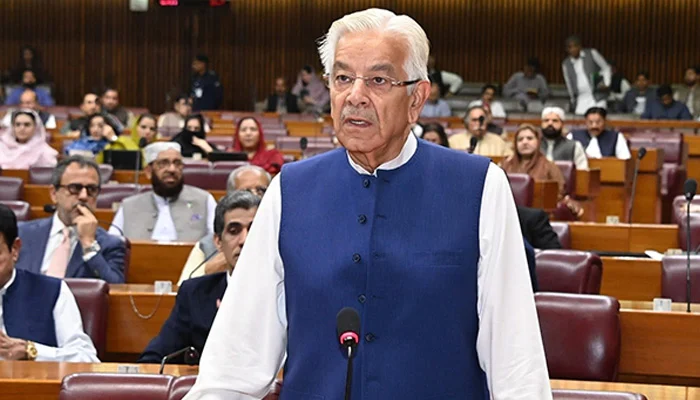
Pakistan’s Defence Minister Khawaja Asif said on Tuesday that the country’s economy has moved out of the “ICU” phase and expressed optimism that it could achieve 6% to 7% GDP growth in the coming years as macroeconomic conditions continue to stabilise.
Speaking during the National Assembly debate on the Federal Budget 2026-27, Asif said the country was on the brink of default when the current government assumed office, but claimed that timely and prudent economic decisions had helped restore stability.
He said the economy was now on a recovery path and moving towards long-term stability, adding that improved management and policy consistency would help sustain growth momentum in the coming years.
The remarks came after the federal government announced a Rs18,771 billion (Rs18.8 trillion) budget for the next fiscal year, aimed at balancing economic stabilisation with fiscal pressures linked to energy costs and regional challenges.
The minister also assured lawmakers that any reduction in petroleum prices would be passed on to the public, and stressed the need for a fair and efficient taxation system to encourage compliance and support economic development.
During his speech, Khawaja Asif also referred to Pakistan’s diplomatic engagements, crediting Prime Minister Shehbaz Sharif, Chief of Defence Forces Field Marshal Syed Asim Munir and the broader leadership for strengthening the country’s international standing.
He highlighted recent developments in regional diplomacy, including a US-Iran understanding announced by US President Donald Trump, under which Washington and Tehran signed a memorandum of understanding aimed at reducing tensions in the Middle East. Pakistan has been described as playing a mediating role in facilitating dialogue between the two sides since the outbreak of conflict on February 28.
On internal security matters, the minister commented on the situation in Azad Jammu and Kashmir, saying that decisions related to refugee representation should be taken by elected institutions rather than under pressure from groups outside the constitutional framework.
He rejected what he called attempts by foreign-backed elements to influence local politics and said legitimate concerns were being addressed through democratic and legal processes.
Khawaja Asif also urged political actors to avoid inflaming divisions on ethnic or regional grounds, stressing that Pakistan’s diverse communities had long coexisted peacefully while maintaining their cultural identities.