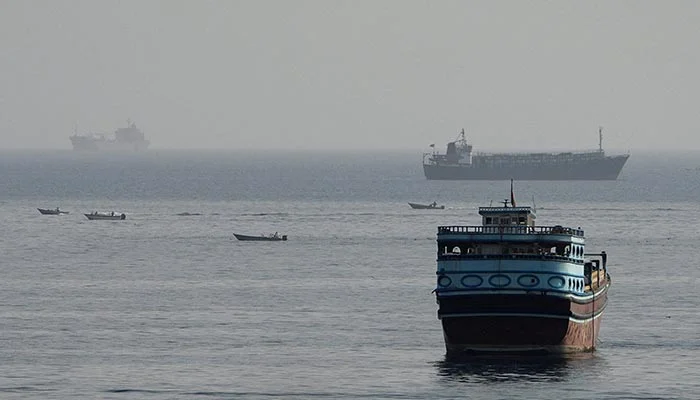
WEB DESK: Iran and Oman are discussing a proposed agreement that could give Tehran a greater role in overseeing ships entering the Persian Gulf through the Strait of Hormuz, according to senior Iranian and regional officials, as diplomatic efforts continue to ease tensions in the region.
According to Reuters, discussions are ongoing but several key issues remain unresolved, including the extent of Iran’s authority over vessels passing through the strategic waterway and the framework for any inspection or fee collection mechanism.
Sources said negotiators have broadly agreed on granting Iran some level of oversight over ships entering the Gulf through the Strait of Hormuz. However, Gulf countries are seeking a system under which inspections would be supervised jointly by regional states and any transit fees would remain voluntary.
An Iranian official said one of the main unresolved issues concerns Iran’s role in monitoring vessels leaving the Gulf, while discussions also continue over possible transit fees. Tehran is reportedly seeking charges ranging from five to seven per cent of cargo value, whereas Oman has proposed lower fees and the United States is opposed to imposing any charges.
US President Donald Trump has said negotiations are progressing positively and expressed confidence that the Strait of Hormuz would reopen soon. However, Iranian officials cautioned that it was premature to describe any agreement as final, stressing that negotiations were still continuing.
The talks come as oil markets remain sensitive to developments in the Middle East. Oil prices edged higher after Yemen’s Iran-aligned Houthi movement claimed responsibility for another attack on a Saudi-flagged oil tanker in the Red Sea, adding to concerns over disruptions to global energy supplies.
The Houthis said the attack was part of their campaign against regional shipping, while Indian authorities also confirmed that an Indian-flagged vessel struck near Yemen had sunk, with all 14 crew members rescued safely.
The Strait of Hormuz remains one of the world’s most strategically important maritime routes, handling a significant share of global oil and liquefied natural gas exports. Any agreement affecting navigation through the waterway would have major implications for regional security, global energy markets and international trade.