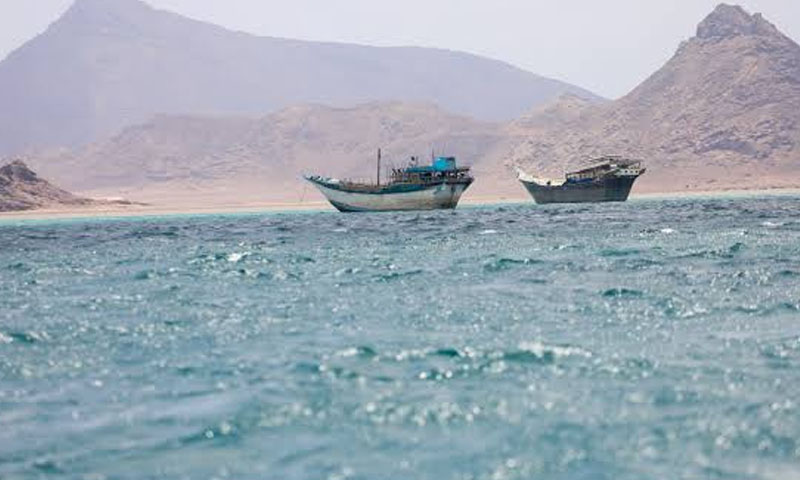
WEB DESK: Yemen’s Iran-aligned Houthi movement on Monday announced a naval blockade against Saudi Arabia, opening a potential new front in the escalating confrontation involving the United States and Iran and raising fresh concerns over global energy supplies and maritime trade.
The Houthis said the blockade would take immediate effect, describing it as a response to what they called Saudi Arabia’s continued blockade of Yemen. The group declared a “maritime embargo” against Saudi Arabia under what it termed the principle of “an eye for an eye.”
Saudi Arabia did not immediately respond to the announcement.
The move came despite indications that diplomatic efforts between Tehran and Washington remain active. Iran’s Foreign Ministry confirmed that mediators had presented new proposals aimed at reducing tensions but did not disclose further details.
Oil prices briefly rose following the Houthi announcement before easing as markets remained hopeful that diplomatic negotiations could prevent a wider regional conflict. However, insurance costs for commercial vessels transiting the Red Sea increased amid growing security concerns.
The Bab el-Mandeb Strait, linking the Red Sea to the Gulf of Aden, is one of the world’s busiest maritime trade routes. Any prolonged disruption could significantly affect global oil shipments and international trade.
According to Reuters, a senior Iranian official said Tehran had received a proposal from international mediators for a 10-day ceasefire aimed at reviving last month’s interim agreement and creating conditions for broader negotiations.
Pakistani government sources said Iranian Interior Minister Iskandar Momani had also requested Pakistan to resume its mediation efforts during his visit to Islamabad.
The diplomatic activity followed another night of military exchanges between the United States and Iran. US forces continued strikes on Iranian military targets, while Iran’s Islamic Revolutionary Guard Corps (IRGC) claimed responsibility for attacks on US military assets in Jordan, Kuwait and Syria.
US President Donald Trump defended the latest military operations, saying the strikes were in response to the deaths of American service members in recent Iranian attacks and warning Tehran of further retaliation.
The conflict has also heightened security risks across the Gulf. The IRGC claimed that two oil tankers exploded while attempting to transit the Strait of Hormuz through what it described as an unsafe route, although the report could not be independently verified.
Separately, the United Kingdom Maritime Trade Operations agency reported that a commercial vessel had been struck by an unidentified projectile off the coast of Oman near the Strait of Hormuz.
Meanwhile, explosions were reported in several Iranian cities, while Iran said it targeted US military installations in Jordan, Kuwait and Syria. Bahrain and Kuwait also reported fresh security alerts, with Kuwaiti authorities stating that a desalination plant had come under attack for a second consecutive day.