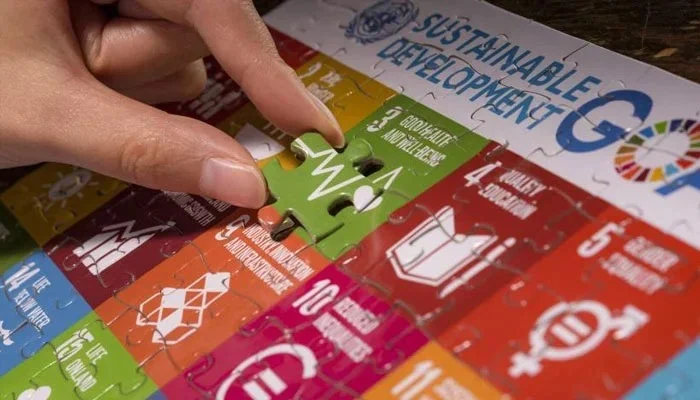
ISLAMABAD: The government has proposed establishing a Sustainable Development Goals (SDGs) Support Unit with an allocation of Rs437.3 million from the national exchequer, without any financial contribution from the United Nations Development Programme.
The move has also renewed questions about the performance of the previous SDGs Support Unit, which was launched in 2016 with a total allocation of Rs1 billion over five years under a cost-sharing arrangement between the federal government and UNDP.
According to available details, the government contributed Rs430 million during that period, while the UN system provided Rs221 million, resulting in a 66.2% share by Pakistan and 33.8% by the UN.
Officials said disagreements had emerged between the Planning Commission and UNDP over financial oversight, with concerns that spending decisions were not adequately shared. Former deputy chairman Planning Commission Sartaj Aziz had raised objections to the arrangement at the time.
In 2022, the Planning Commission decided to fund and manage the SDGs unit independently and initiated recruitment. However, the initiative stalled following the change in government and the 2022 floods.
Pakistan had earlier been the only country to hand over SDGs administration to UNDP in 2016, but later reversed the decision. Now, the planning ministry is again seeking to involve UNDP in management, while proposing a fresh project costing Rs437.256 million without external financial support.
Concerns have been raised that once approved, the project may face limited scrutiny and that funds could be utilised for administrative expenses rather than achieving SDGs targets.
According to the concept paper, the proposed unit will function as an SDGs Secretariat and serve as an international focal point, focusing on improving coordination, data collection, reporting mechanisms, and stakeholder engagement.
The initiative also aims to establish a research and resource centre, develop a comprehensive dashboard for SDGs-related data, and promote evidence-based policymaking to accelerate progress on poverty reduction, inequality and sustainable development.
Officials say the project is intended to build on previous efforts and outline a pragmatic action plan for the next eight years, while strengthening data systems and integrating development initiatives across sectors.