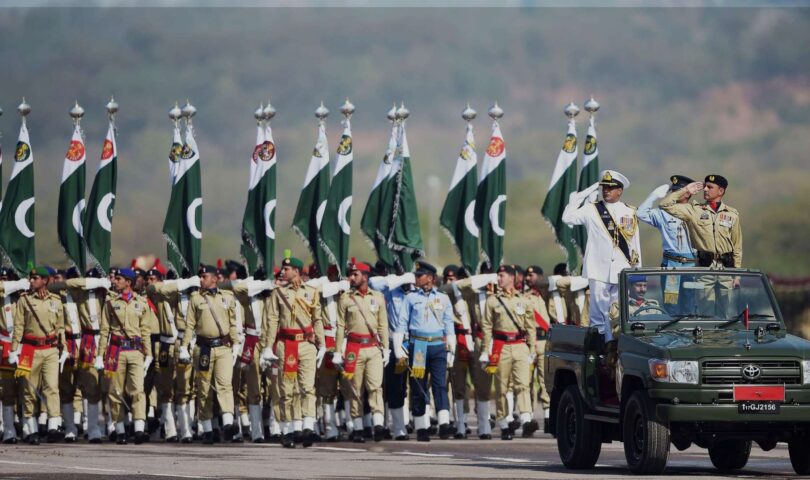
ISLAMABAD: The federal government has allocated Rs3 trillion for defence in the budget for fiscal year 2026-27, with Finance Minister Muhammad Aurangzeb saying the move is aimed at strengthening Pakistan’s security and making the country “invincible” in the face of regional challenges.
Presenting the federal budget in the National Assembly on Friday, Aurangzeb said economic strength and national defence were closely linked, stressing that a robust defence capability remained essential for safeguarding the country’s sovereignty and supporting long-term economic stability.
The finance minister said Pakistan’s armed forces had demonstrated their capability during last year’s military confrontation with India and referred to Operation Bunyan-ul-Marsoos as a landmark achievement in the country’s military history. He added that Pakistan’s defence preparedness had gained international recognition and enhanced the country’s strategic standing.
Aurangzeb also highlighted the importance of Pakistan’s growing regional partnerships, describing a recently signed strategic agreement with Saudi Arabia as highly significant. He said the agreement reflected increasing confidence in Pakistan’s capabilities and strengthened bilateral cooperation in key sectors.
Turning to the economy, the finance minister said the government had achieved substantial economic stabilisation under the leadership of Prime Minister Shehbaz Sharif despite facing major challenges, including devastating floods and the impact of the US-Iran conflict on the regional and global economy.
He said Pakistan’s economy expanded by 3.7 per cent during the outgoing fiscal year, marking a significant improvement compared to previous years. Large-scale manufacturing recorded growth of 6.1 per cent, while the services sector expanded by 4.1 per cent, both reaching their highest levels in four years.
According to Aurangzeb, the overall size of Pakistan’s economy has increased to $452 billion, while per capita income rose to $1,901 from $1,751 recorded last year. He said the improvement reflected growing economic activity and increasing confidence in the country’s economic direction.
The finance minister further noted that inflationary pressures had eased considerably over the past two years, allowing the State Bank of Pakistan to reduce the policy rate from 22 per cent to 11.5 per cent. He said the decline in borrowing costs was expected to support investment, industrial growth and job creation.
Aurangzeb also highlighted the strong performance of overseas Pakistanis, saying remittances reached $38 billion during the first 11 months of the fiscal year and were expected to exceed $41 billion by year-end, setting a new national record.
He said tax reforms and revenue enhancement measures had improved fiscal stability, with the tax-to-GDP ratio increasing by around two percentage points over the last three years. The government, he added, would continue implementing structural reforms aimed at sustaining economic growth, improving public finances and strengthening national resilience.
The minister said the new budget reflects the government’s commitment to balancing economic development with national security requirements while maintaining momentum on reforms designed to ensure long-term stability and prosperity.