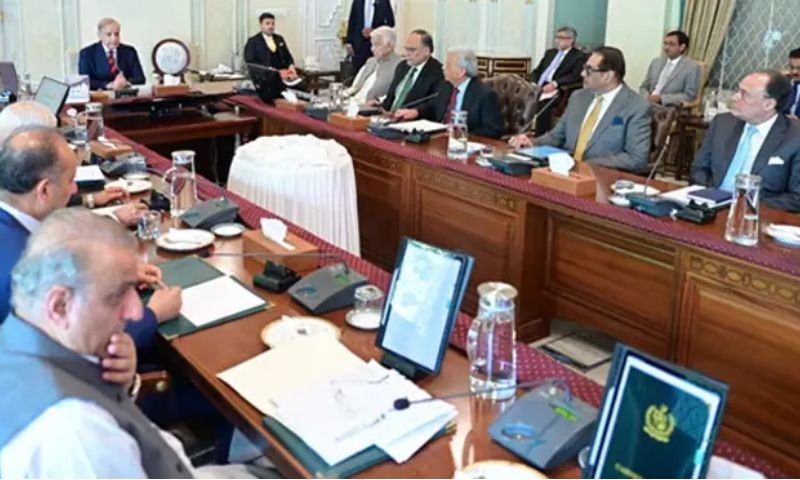
ISLAMABAD: The federal cabinet, chaired by Prime Minister Shehbaz Sharif, met in Islamabad on Thursday and approved the draft Defence Forces Act 2026, prepared in continuation of amendments made under the 27th Constitutional Amendment.
The draft aims to determine administrative matters relating to the post of Chief of Defence Forces and the Chief of Defence Forces Headquarters. Following the cabinet’s approval, the draft will now be presented in Parliament’s ongoing session for passage.
The cabinet also approved an amendment to the National Command Authority Act 2010, which had become necessary following the 27th Constitutional Amendment. The amended draft will likewise be presented in Parliament for approval.
The 27th Constitutional Amendment, passed last November, reshaped Pakistan’s higher defence structure by scrapping the office of the Chairman Joint Chiefs of Staff Committee and introducing the new post of chief of defence forces, a role held concurrently by the army chief.
Field Marshal Asim Munir became the country’s first chief of defence forces under the new setup.
The amendment also created the position of Commander of the National Strategic Command, a four-star post responsible for overseeing the operational integration of Pakistan’s strategic forces.
Last month, Prime Minister Shehbaz Sharif promoted Lt Gen Syed Aamer Raza to four-star rank and appointed him as the country’s first Commander of the National Strategic Command.
With that appointment in place, amendments to the National Command Authority Act, 2010, which still reflects the military hierarchy that existed before the 27th Amendment, had become necessary.
PM renews talks offer to opposition
In a separate discussion, Prime Minister Shehbaz Sharif renewed his offer of talks to the opposition during Thursday’s televised federal cabinet meeting, saying the government remained ready for “meaningful” dialogue.
He said the government had consistently expressed its willingness to engage with the opposition.
“I once again invite the opposition for talks from this forum… to support Pakistan’s economic progress and to strengthen democracy,” he said, adding, “But it takes two to tango. Now it’s on them how soon they agree for constructive dialogue.”
Relations between the government and opposition have remained strained since the 2024 elections, after which PTI demanded a judicial commission to investigate the May 9, 2023 and November 26, 2024 protests.
The 2023 unrest broke out nationwide following the arrest of PTI founder Imran Khan, while the 2024 demonstration in Islamabad was held to demand his release. Both turned violent.
Points of friction between the two sides have since multiplied, including disagreements over Imran Khan’s health in custody.
Despite this, the prime minister and other government figures have repeatedly called on PTI to engage in dialogue.
Thursday’s invitation came just days after Parliamentary Affairs Minister Tariq Fazal Chaudhry told the Senate that the offer for talks remained open, saying “the solution lies in seriousness” and urging the opposition to settle on a time and venue for negotiations.
That same day, PM’s Adviser on Political Affairs Rana Sanaullah, Law Minister Azam Nazeer Tarar and Chaudhry met opposition leaders, National Assembly opposition leader Mahmood Khan Achakzai and Senate opposition leader Allama Raja Nasir Abbas, in the NA opposition leader’s chamber.
According to a statement from the Tehreek Tahafuz Ayeen-i-Pakistan spokesperson, the two sides discussed the appointment of the chief election commissioner along with the broader political situation and agreed to continue such meetings.
Diesel prices reduced
Separately, addressing the cabinet, the prime minister noted that diesel prices had been cut by around Rs32 per litre following efforts by the petroleum ministry.
“This is good news,” he said, referencing disruptions to fuel supply linked to the Strait of Hormuz, through which a fifth of the world’s oil and LNG normally passes, amid the US-Israeli war on Iran.
He recalled that when the war began, the federal government “took a hit of Rs128 billion by cutting down its budget for the Public Sector Development Programme” in order to provide relief to the public.