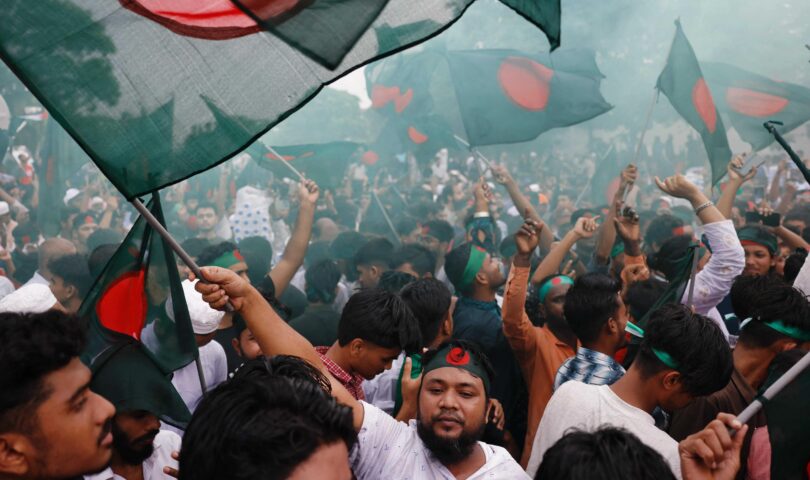
DHAKA: In Dhaka’s streets and campuses, the coming election is being discussed in unusually simple terms by many young voters: change vs. continuity.
Across tea stalls, university lawns, and market lanes, Pakistan Narrative heard a recurring theme from first-time voters — this election, they say, is about building a “New Bangladesh” after the upheaval of 2024. The language is emotional, often symbolic, and centered on reform rather than party manifestos.
“This time we are voting for a system, not just a party,” a student at University of Dhaka said.
A Youth Bulge That Could Matter
Local analysts estimate that millions of young Bangladeshis will be voting for the first time in this poll. Students and youth activists argue that this demographic weight can influence outcomes — not necessarily by backing one traditional party, but by pushing for structural reform.
Among youth groups, references to the July 2024 movement are common. Many see that period as the birth of a new political consciousness that demands accountability, limits on executive power, and changes to how governance works.
Reform Talk on the Streets
In conversations with voters, Pakistan Narrative repeatedly heard discussion of political reforms that have entered public debate alongside the election:
Limiting how many times a prime minister can serve
Separating party leadership from the head of government
Proposals for a new upper house (Senate-style body)
Calls for constitutional changes in the first months after the vote
Whether and how these ideas materialize will depend on the next parliament, but the idea of reform itself has become a campaign conversation point, especially among youth.
Parties Through the Youth Lens
Young voters often frame the race not through historical loyalties but through present perceptions:
The Bangladesh Nationalist Party (BNP) is viewed as the largest organized alternative after the long rule of the Awami League.
The Bangladesh Jamaat-e-Islami is seen by some youth as disciplined and active at the grassroots, especially after forming understandings with student-origin political actors.
Newly formed youth platforms are trying to convert protest energy into formal politics.
Notably, several young voters said they recognize party symbols more readily than candidate names — a reminder of how visual politics still shapes voter behavior.
Women Voters and Grassroots Campaigning
Community conversations also highlighted the visible role of women voters. In several neighborhoods, women said they are discussing politics more openly than before, often influenced by local campaign outreach rather than televised debates.
Law, Order, and Daily Pressures
Beyond politics, traders and small shopkeepers raised concerns about informal payments and local pressures that affect daily business life. Some alleged that extortion practices have persisted or worsened since the political transition, while others said enforcement varies by area. These are difficult claims to verify independently, but they reflect the economic anxieties shaping voter sentiment.
There is also a perception among some residents that foreign investors receive stronger institutional protection than small local traders — a contrast frequently mentioned in market conversations.
A Narrative of Independence
A strand of discussion, especially among youth, links domestic reform with a desire for a more independent foreign policy posture. References to India often arise in this context, with calls for dignity and balance in regional relations. At the same time, people emphasize that criticism of policy does not mean hostility toward people across the border.
Echoes Familiar to Pakistani Audiences
For observers from Pakistan, some of the language used by Bangladeshi youth — talk of azadi from old systems, of reform, of youth deciding the future — may sound familiar. But here it is rooted in Bangladesh’s own recent upheaval and political memory.
What This Means for the Vote
Whether youth sentiment translates into a decisive electoral shift remains to be seen. But one thing is clear from Dhaka’s streets:
This election is being experienced by many voters not as a routine transfer of power, but as an opportunity to redefine how the state should function.
As one first-time voter put it:
“We are voting so the system changes, not just the faces.”