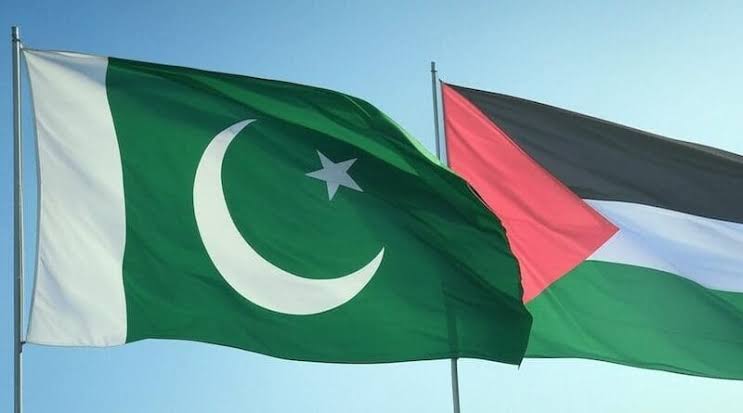
The enduring bond between Pakistan and Palestine is far more than a political alignment; it is a profound, historical, spiritual, and moral connection rooted in the Islamic concept of brotherhood. Islam teaches, “A Muslim is the brother of another Muslim” (Sahih Bukhari). Likewise, the Prophet Muhammad (ﷺ) said that the believers are like one body, when one part feels pain, the entire body responds (Sahih Bukhari). This Hadith perfectly reflects Pakistan’s heartfelt solidarity with Palestine, showing that the connection between the two nations is not limited to diplomacy but is a matter of shared faith and collective suffering.
Long before Pakistan’s creation, Muslim leaders in the subcontinent raised their voices against the injustice faced by Palestinians. Quaid‑e‑Azam Muhammad Ali Jinnah held a firm and principled stance. In 1937, he strongly condemned British policies in Palestine as a betrayal of its Arab population. He rejected the idea of creating a Jewish state on Palestinian land and famously said in 1945 that “the Muslims of India will stand shoulder to shoulder with their Arab brethren in Palestine.” His commitment laid the foundation for Pakistan’s foreign policy, which remains unwavering.
Since independence in 1947, Pakistan has maintained a clear position: it will not recognize Israel until Palestinians gain a just, sovereign state. This is symbolically embedded in the Pakistani passport, which states, “This passport is valid for all countries of the world except Israel.” This declaration reflects not just foreign policy but moral conviction and religious solidarity.
On the international stage, Pakistan has consistently condemned Israeli aggression, illegal settlements, and human rights violations at forums like the United Nations and the OIC. It continues to call for a viable two‑state solution, envisioning Palestine with Al‑Quds (Jerusalem) as its capital.
The emotional bond between the people of Pakistan and Palestinians is powerful. Whenever Palestinians face suffering, Pakistanis rally with protests, prayers, and charitable campaigns. Meanwhile, Pakistan also provides solid humanitarian assistance, sending food, medical supplies, and relief during times of crisis in Gaza.
Pakistan has also taken additional steps to support Palestinian students through educational opportunities. It is widely estimated that tens of thousands of Palestinians reside in Pakistan, many of them as students. Various Pakistani universities offer reserved seats for Palestinian students in fields such as medicine, engineering, dentistry, and pharmacy. Pakistan has eased several administrative hurdles for them, making it easier to pursue higher education and continue their academic journey during times of crisis back home.
In this way, Pakistan’s relationship with Palestine is not empty rhetoric; it is rooted in faith, history, and a deep moral responsibility. Guided by Islamic teachings and inspired by Quaid‑e‑Azam’s vision, Pakistan stands firmly with Palestine, offering not just diplomatic and humanitarian support but meaningful educational opportunities until justice, peace, and freedom are finally achieved.
About the Author:
Rashid Dar is an HR professional and social reform enthusiast who has been writing on governance, defense, and institutional development for the past 17 years.