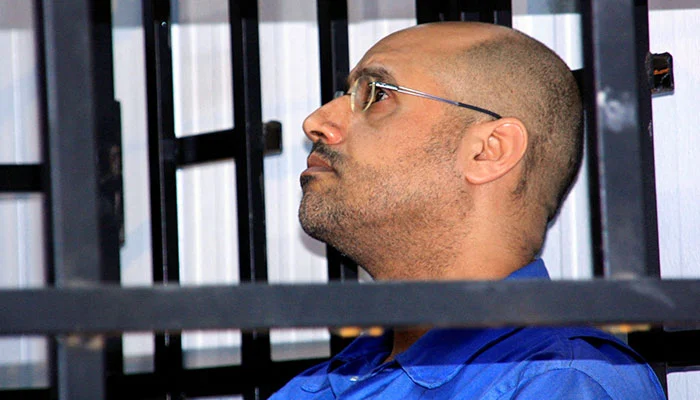
Saif al-Islam Gaddafi, son of Libya’s late longtime ruler Muammar Gaddafi, was killed on Tuesday after a “four-man commando” attacked his home in the western Libyan town of Zintan, according to his French lawyer Marcel Ceccaldi.
Ceccaldi told AFP that the identity of those behind the killing remains unknown. He added that one of Saif’s close associates had warned around 10 days ago that there were concerns about his security.
Sources close to the family, his lawyer Khaled el-Zaydi, and Libyan media also confirmed the assassination. However, details about the circumstances of his death were not immediately clear.
Saif al-Islam was once regarded as the most influential figure in Libya after his father, despite holding no official post. He played a key role in shaping policy and leading sensitive diplomatic missions, including negotiations on Libya abandoning weapons of mass destruction and compensation for victims’ families of the 1988 Lockerbie bombing.
Educated at the London School of Economics and fluent in English, he was long viewed by Western governments as a reform-minded figure who could help Libya shed its pariah status. He called for a constitution and respect for human rights.
But during the 2011 uprising against Muammar Gaddafi, Saif became one of the architects of the crackdown on rebels, warning that Libya would face rivers of blood. In a televised speech, he declared the government would fight to the last bullet.
After rebels seized Tripoli, Saif attempted to flee towards Niger disguised as a Bedouin tribesman. He was captured by a militia and taken to Zintan, where he spent years in detention.
Human Rights Watch later reported he did not allege mistreatment, though concerns were raised over prolonged solitary confinement. In 2015, a court in Tripoli sentenced him to death by firing squad for war crimes. He was also wanted by the International Criminal Court for murder and persecution.
Released in 2017 under an amnesty law, Saif remained largely out of sight, living underground to avoid assassination. In 2021, he re-emerged to file his candidacy for presidential elections, seeking to draw on nostalgia for the stability of the pre-2011 era.
His bid was highly controversial and rejected by many armed factions and those who suffered under his father’s rule. He was disqualified due to his conviction, and disputes over his candidacy contributed to the collapse of Libya’s election process, returning the country to political stalemate.
In an interview in 2021, Saif described his strategy for returning to politics, saying he needed to come back “slowly, slowly” after a decade away from the Libyan people.