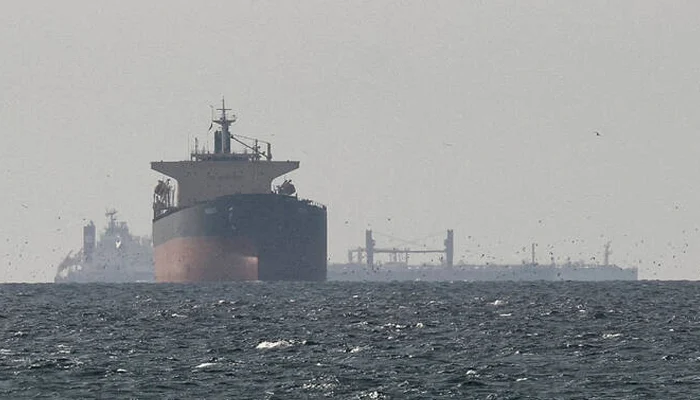
ABU DHABI: A Pakistani-flagged tanker has become the latest vessel to transit the Strait of Hormuz by sailing close to the Iranian coastline, signalling a possible shift in how ships navigate the world’s most critical oil chokepoint amid escalating regional tensions, Bloomberg reported on Tuesday.
According to vessel-tracking data, the tanker Karachi passed through a narrow gap between Iran’s Larak and Qeshm islands on Sunday, maintaining open signals before continuing along the coast into the Gulf of Oman. Two bulk carriers reportedly followed a similar route on Monday, while other ships have chosen to switch off tracking systems for safety.
The development comes as the ongoing conflict involving the United States and Israel against Iran enters its third week, with reports indicating at least 2,000 deaths and no immediate end in sight.
The Strait of Hormuz, which handles around 20% of the world’s oil and liquefied natural gas shipments, remains largely disrupted. Efforts to reopen the vital waterway have faltered, with allies declining a request by former US president Donald Trump for assistance, triggering a surge in global energy prices and inflation concerns.
Additional vessel movements include two India-flagged liquefied petroleum gas tankers that crossed the strait earlier, as well as a Gambia-flagged cargo ship that exited the waterway on Tuesday. However, tracking data has been inconsistent due to electronic interference affecting signals in the region.
Experts believe the emerging route close to Iran could indicate a controlled transit system. Harrison Prétat, a fellow at the Asia Maritime Transparency Initiative, said that if the route continues to function, it may reflect Iranian oversight of shipping traffic.
Analysts suggest Tehran could be restricting access to traditional routes while allowing selected vessels to pass through designated channels. This has raised the possibility that ships may now require informal approval from Iranian authorities to safely navigate the strait.
Since the escalation began, Iran has reportedly targeted multiple vessels in and around the Strait of Hormuz, effectively limiting maritime traffic. The disruption has left several ships stranded inside the Persian Gulf, while others have been unable to enter, creating significant challenges for global energy trade.
Financial analysts, including Natasha Kaneva, noted that the situation reflects a scenario where the strait is not officially closed, but transit increasingly depends on political understandings with Tehran.
Under normal conditions, vessels avoid sailing close to Iranian waters due to security risks, and established shipping lanes direct traffic along the opposite side of the channel. However, recent attacks on ships using traditional routes have forced operators to reconsider navigation strategies.
Experts warn that while limited transits along the Iranian coastline offer some reassurance, they remain far below normal shipping volumes, with insurers and financial institutions continuing to flag the area as high-risk.