ISLAMABAD: In the wake of renewed militant attacks across Balochistan, ruling party lawmakers on Monday called for an unequivocal condemnation of terrorism, rejecting the narrative that militancy in the province is linked to deprivation or rights-related grievances.
According to security sources, terrorists affiliated with India-sponsored Fitna al-Hindustan carried out coordinated attacks over the weekend across 12 towns in Balochistan, targeting civilians in Quetta, Mastung, Nushki, Dalbandin, Kharan, Panjgur, Tump, Gwadar and Pasni.
Balochistan Chief Minister Sarfraz Bugti said at least 31 civilians and 17 security personnel were martyred in the attacks carried out by the outlawed Balochistan Liberation Army. He made the remarks during a Geo News programme a day earlier.
In response, security forces eliminated 22 more militants, bringing the total number of terrorists killed in the province over the past three days to 177, the sources said.
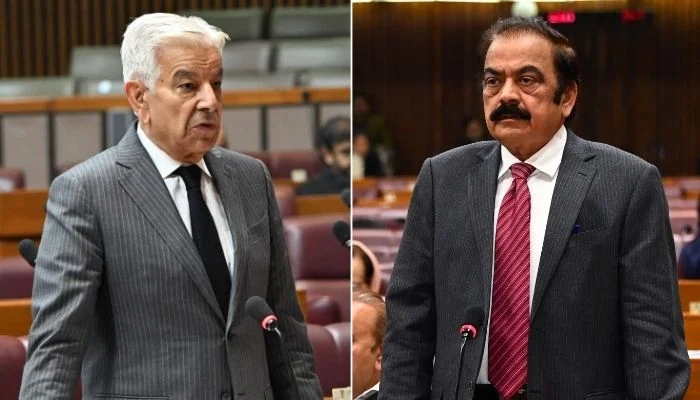
Addressing the National Assembly, Defence Minister Khawaja Asif said the narrative of deprivation in Balochistan was baseless, reiterating that no negotiations would be held with terrorists and that the state would respond with full force.
He said terrorists had no writ in any part of the province and accused groups operating in Balochistan of receiving support from across the border in Afghanistan. He also alleged that India was backing terrorist activities through proxy networks.
Highlighting recent counterterrorism operations, Asif said none of the 177 killed militants had any political or nationalist affiliation. He added that criminal networks had developed armed wings, with illegal smuggling from Afghanistan and Iran generating billions of rupees daily.
The defence minister said Balochistan, which covers 40% of Pakistan’s landmass, required a substantial security presence. He added that the federal government had allocated Rs100 billion for development in the province, while Punjab received Rs170 billion and other provinces were also funded accordingly.
Asif urged all political parties to rise above differences and unite against terrorism.
Separately, Prime Minister’s Adviser on Political Affairs Rana Sanaullah, speaking in the Senate, said terrorists must be labelled as such “without any ifs or buts” and rejected the impression that there was resentment or a lack of government writ in Balochistan.
He said criminal activity could occur anywhere when small groups acted together, adding that in Balochistan, militants had stopped buses, abducted passengers and killed people from other provinces in front of their families.
Referring to attacks such as the Jaffar Express incident, Sanaullah questioned what kind of grievance justified the killing of innocent civilians and asked who took custody of the terrorists’ bodies after they were brought to a hospital in Quetta.
He alleged the militants were acting against Pakistan at the behest of hostile elements and said they would meet the same fate as the enemy defeated during the “Marka-e-Haq”.
Sanaullah was responding to concerns raised by Opposition Leader in the Senate Allama Nasir Abbas, who criticised the government for failing to maintain law and order in Balochistan.
Abbas said the state lacked writ in parts of the province at night and accused the government of failing to ensure accountability for security lapses. He said multiple cities had been targeted, sending a troubling message to the world.
“Your duty is not to cry, but to restore the writ of the state,” Abbas said, questioning whether any senior officials had resigned over the failures. He also called for dialogue and adherence to the rule of law.
Senate resolution
Later, the Senate unanimously passed a resolution condemning the terrorist attacks in Balochistan. The resolution, moved by Law Minister Azam Nazeer Tarar, paid tribute to the security forces and called for thorough investigations to ensure those responsible are brought to justice.