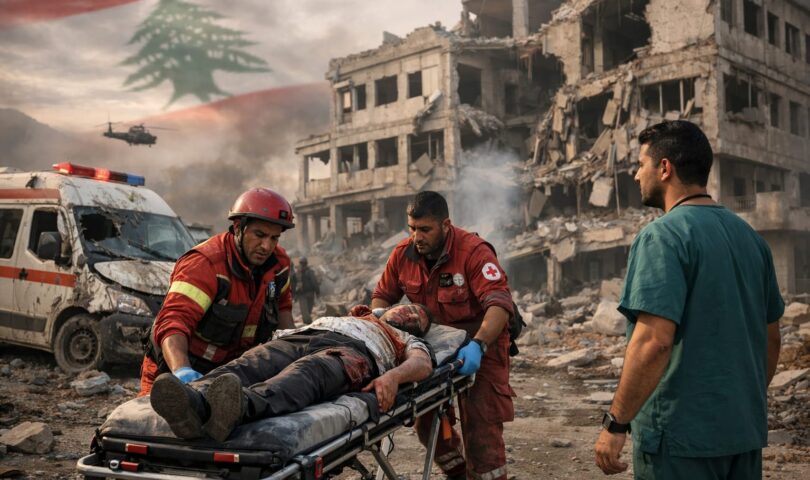
The ongoing escalation between Israel and Hezbollah has pushed Lebanon’s already fragile healthcare system to the brink of collapse, raising serious humanitarian concerns across the region.
Over the past month, intensified Israeli strikes in southern Lebanon have not only targeted military positions but have also severely impacted medical infrastructure. According to Lebanon’s Ministry of Public Health, at least 53 healthcare workers have been killed, while 87 ambulances and medical facilities have been damaged or destroyed. In addition, five hospitals have been forced to shut down, leaving thousands without access to essential medical care.
Healthcare Under Pressure
Medical experts and humanitarian organizations warn that the situation is rapidly deteriorating. The combination of airstrikes, evacuation orders, and widespread displacement has significantly reduced access to healthcare services.
Organizations such as Doctors Without Borders (MSF) have highlighted a “documented pattern” of attacks affecting healthcare. According to field reports, these strikes are not only disrupting emergency response systems but are also forcing medical staff to abandon their posts due to safety concerns.
The World Health Organization (WHO) has also confirmed that several healthcare facilities have come under direct attack, further weakening the country’s ability to respond to the crisis.
Mass Displacement Worsens Crisis
The destruction of healthcare infrastructure is closely linked with rising displacement. Since the escalation began in early March, more than 1.2 million people have been forced to flee their homes, primarily from southern Lebanon and Beirut’s southern suburbs.
This mass movement of people has placed immense pressure on hospitals in relatively safer areas, particularly in Beirut and northern regions. Emergency rooms are reportedly overwhelmed, while patients requiring critical treatments such as chemotherapy, dialysis, and radiotherapy are being relocated under difficult conditions.
Healthcare professionals on the ground describe a growing imbalance between demand and capacity, warning that the system is nearing a breaking point.
Targeting of Medical Workers
One of the most alarming aspects of the conflict is the increasing number of attacks on medical personnel. Reports indicate that paramedics and first responders have been repeatedly targeted, including incidents involving “double-tap strikes,” where a second attack follows shortly after emergency teams arrive at the scene.
International human rights organizations, including Human Rights Watch, have documented what they describe as repeated and potentially deliberate attacks on healthcare workers. Such actions, if verified, could constitute violations of international humanitarian law, which explicitly protects medical personnel and facilities during armed conflict.
A System Already on the Edge
Lebanon’s healthcare system was already under severe strain prior to the current conflict. Years of economic crisis, political instability, and previous conflicts had weakened public health services and reduced operational capacity.
The latest escalation has compounded these challenges. Disrupted supply chains, particularly due to regional instability affecting shipping routes, have made it increasingly difficult to secure essential medicines and medical equipment.
Long-Term Consequences
Experts warn that the destruction of healthcare infrastructure will have lasting consequences beyond the immediate conflict. Untreated injuries, delayed medical care, and the spread of chronic diseases could create a prolonged public health crisis.
Additionally, the loss of medical personnel and facilities may take years to recover, further deepening Lebanon’s humanitarian challenges.
A Humanitarian Concern Beyond Borders
The situation in Lebanon reflects a broader and troubling trend seen in modern conflicts, where healthcare systems are increasingly caught in the crossfire. Analysts argue that repeated attacks on hospitals and medical workers risk normalizing violations of international norms.
As the conflict continues, the urgent need for humanitarian access, protection of medical services, and international intervention becomes more critical than ever.