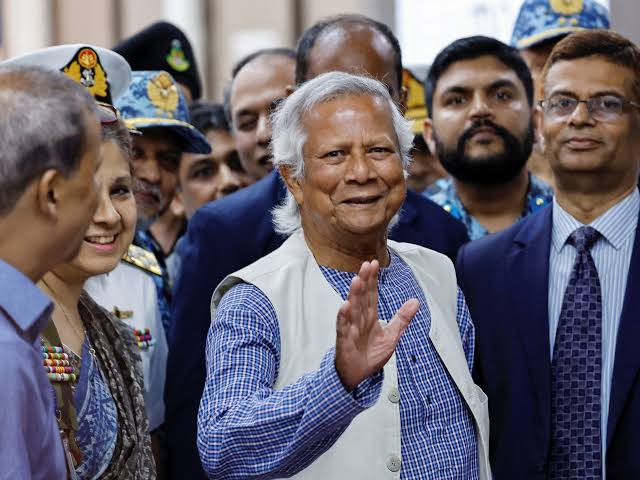
Dhaka: In a political journey that blends global recognition, domestic responsibility, and a rare voluntary retreat from power, Nobel Peace Prize laureate Professor Muhammad Yunus has overseen Bangladesh’s transition through a crucial electoral phase — defying critics who had long questioned whether elections would be held under his interim leadership.
For months, political opponents had argued that the unelected transitional setup would delay the democratic process and consolidate authority. However, the successful conduct of national elections has not only changed that narrative but also positioned Yunus as an unusual figure in contemporary politics — a leader who entered governance during a crisis with a limited mandate and is now preparing to step away after completing it.
The Economist Who Changed the Meaning of Banking
Long before his role in Bangladesh’s political transition, Muhammad Yunus had already secured a permanent place in global history.
An economist by training, Yunus rose to international prominence through his pioneering concept of microfinance and the establishment of the Grameen Bank, which provided small collateral-free loans to the rural poor — particularly women — enabling millions to start small businesses and escape the cycle of poverty.
This innovative model of “social business” transformed development economics and earned him the Nobel Peace Prize in 2006, jointly with Grameen Bank. The Nobel Committee recognized his efforts for creating economic and social development from below, describing microcredit as a powerful tool in the fight against poverty.
Yunus became one of the most globally respected voices on financial inclusion, poverty alleviation, and ethical capitalism.
From Social Business to State Responsibility
Despite his global stature, Yunus remained a controversial figure in Bangladesh’s domestic politics, particularly during previous administrations.
His entry into the country’s interim governing structure came at a time of deep political polarization, institutional crisis, and mounting pressure — both domestically and internationally — for a credible electoral roadmap.
The interim setup was tasked with:
• Restoring administrative neutrality
• Rebuilding public trust
• Ensuring electoral transparency
• Facilitating a peaceful democratic transition
Yunus repeatedly stated that his role was temporary, constitutional, and election-focused, rejecting speculation that he sought long-term political authority.
The Election That Changed the Narrative
The holding of the elections on schedule marked the defining moment of this transitional phase.
Across Bangladesh, long queues at polling stations, visible participation of women voters, strict security deployment, and an organized ballot management system reflected a functioning electoral exercise.
Election observers and political analysts noted that the process, while not free from political tensions, demonstrated administrative control and a clear intent to transfer power through the ballot.
For Yunus’s critics — who had claimed that elections would be postponed — the vote became a turning point.
A Rare Exit in Modern Politics
What has further strengthened Professor Yunus’s global image is his decision to step away from political authority after completing the democratic process and return to his lifelong work in social business and poverty reduction.
In a region where political transitions are often contested and leadership extensions are common, analysts describe this as a rare example of a transitional figure:
• Accepting power without electoral ambition
• Completing a defined democratic mandate
• Voluntarily preparing to leave
Regional and Global Significance
The development is being closely watched across South Asia, where debates over electoral credibility, caretaker arrangements, and peaceful transfer of power remain central to democratic discourse.
For Bangladesh, the successful conduct of elections under an interim structure led by a globally recognized development figure may mark:
• A new phase of institutional continuity
• A reset in political legitimacy
• A stronger international democratic image
For the international community, Yunus’s dual legacy — as the banker to the poor and as a transitional democratic facilitator — represents an uncommon fusion of moral authority and political restraint.