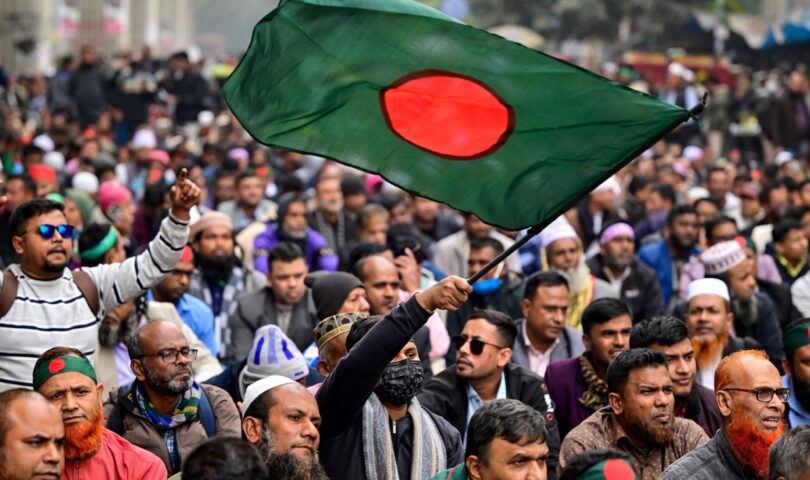
ISLAMABAD: With Bangladesh heading into national polls this week, the election atmosphere in Dhaka is not only about parties and voters, it is also about where the country positions itself in a shifting regional landscape.
Conversations across tea stalls, campuses, and newsrooms suggest that many Bangladeshis see this vote as a moment that could reset foreign policy tone after the long era of the Awami League. While daily life debates center on jobs, prices, and governance, analysts and diplomats are closely watching how relations with India, China, and Pakistan may evolve after the vote.
Recent months have seen visible signals of recalibration. Dhaka’s interim leadership under Muhammad Yunus has expanded engagement with Beijing, including new cooperation in infrastructure and defense-related projects. At the same time, friction with New Delhi has surfaced in public exchanges over minority safety narratives and diplomatic sensitivities following the political transition of 2024.
Yet on the ground, the picture is more nuanced than headlines suggest. Traders, students, and commuters interviewed by Pakistan Narrative repeatedly emphasized stability over confrontation. “We need good relations with everyone,” a shopkeeper in central Dhaka said. “Politics changes, but trade and daily life must continue.”
Diplomatic observers here echo that sentiment. Despite sharper rhetoric, core economic links with India remain intact, particularly in energy supplies and the textile value chain. Meanwhile, China’s ability to deliver large infrastructure projects quickly has strengthened its appeal. Several analysts describe the moment not as a binary shift, but as Bangladesh seeking greater strategic room between partners.
Another quiet development has been Dhaka’s renewed engagement with Islamabad, including the resumption of direct flights after more than a decade. Local commentators say this is less about alignment and more about broadening options in a new political phase.
Even parties with historically strong positions on regional issues appear to be moderating their tone during the campaign. Leaders from the Bangladesh Nationalist Party (BNP) and the Bangladesh Jamaat-e-Islami have publicly emphasized pragmatism in foreign relations, signaling that economic continuity will likely outweigh geopolitical posturing after the vote.
For many voters here, however, geopolitics is background noise. Their primary concerns remain governance, opportunity, and fairness. Still, the election’s outcome may shape how Bangladesh balances its ties across South Asia and beyond in the coming years.
As one university student put it during a campus discussion: “We want a government that keeps Bangladesh respected everywhere, not fighting with anyone.”
From the streets of Dhaka, this election feels like both a domestic decision and a regional signal.