From Delays to Disaster: “The Long Shadow Over the Tejas Fighter Programme”
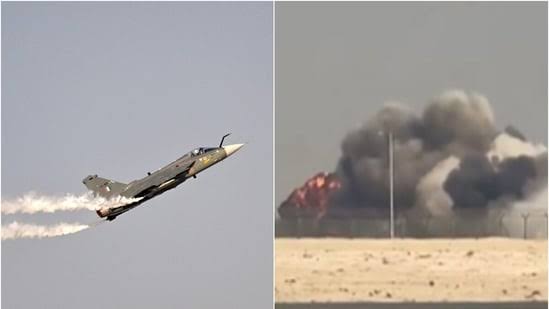
The crash of an Indian Air Force Tejas fighter jet during its aerobatic display at the Dubai Air Show has shaken both the aviation community and India’s defence establishment. The jet went down while performing a low-altitude manoeuvre, resulting in the tragic death of Wing Commander Namansh Syal. With investigations underway and the black box recovered, initial analyses point toward a possible failure to maintain angle of attack during a critical turn, though factors such as pilot blackout due to G-forces are also under examination. The incident took place a day after online speculation about an “oil leak” had been officially debunked, adding an unfortunate dynamic to public perceptions surrounding the aircraft’s safety.
The tragedy cannot be understood without examining the long and troubled history of the Tejas programme. Conceived in the 1980s as India’s indigenous Light Combat Aircraft, the project aimed to replace the aging MiG-21 fleet. Designed by the Aeronautical Development Agency and produced by Hindustan Aeronautics Limited, the programme faced continuous delays, technological obstacles, production limitations, and ongoing dependence on foreign suppliers — particularly for engines. After the first prototype flew in 2001, the aircraft finally entered formal squadron service in 2016.
Yet even after induction, Tejas faced scrutiny. Reports of quality-control problems, avionics issues, and low fleet availability raised questions about long-term reliability. While upgraded variants like the Mk-1A were expected to address these challenges, production delays and supply chain constraints slowed progress. For an aircraft intended to symbolise India’s technological self-reliance, the project has repeatedly struggled to meet timelines and expectations.
These issues connect to a larger problem: inefficiencies and opacity in India’s defence procurement processes. Although the Tejas project itself is not tied to specific corruption scandals, the broader ecosystem — involving slow contracting, inconsistent oversight, and political pressure — has often undermined quality and timelines. Critics argue that symbolic milestones and political narratives, such as showcasing indigenous capability on the global stage, can lead to unready platforms being pushed into service prematurely.
India’s Air Force continues to face strain from equipment reliability issues, maintenance gaps, and shortages of critical spares. A recent parliamentary report highlighted dozens of IAF accidents over five years, attributed to a mix of human error and technical failures. This reflects systemic challenges that extend across both older and newer fleets. The cumulative toll of accidents both un aerial combats and exercises in the last decade remains high, with significant loss of aircraft and pilots — an indication that deeper reforms in training, maintenance, and oversight are urgently needed.
Against this already complex backdrop, political rhetoric has added another layer of tension. A widely circulated line in public discourse claims: “PM Modi wants a second round of Operation Sandoor with Pakistan; at one end they have lost 6 state of the art jets in May and on the other hand they are losing aircraft at airshows — how can they compete with Pakistan, especially in aerial warfare?”
This sentiment — though not grounded in verified policy statements — reflects a strain of public frustration and political commentary following the Tejas crash. The line expresses the view of critics who argue that India cannot afford aggressive posturing or elevated regional tensions when it is simultaneously grappling with aircraft losses, capability gaps, and operational challenges at home. It also highlights the perception that visible failures, especially in international settings, weaken India’s claims of military parity or superiority in the subcontinent. While such assertions often stem from political or partisan narratives rather than official positions, they reveal the extent to which military performance and national image have become intertwined in domestic debate.
The crash at an international venue, therefore, is more than an isolated mishap; it is a moment of reckoning for India’s defence-production ecosystem. Internationally, it may temper interest from potential foreign buyers. Domestically, it is likely to increase scrutiny of HAL’s manufacturing standards, DRDO’s design oversight, and the broader “Make in India” defence narrative. Production timelines could be further delayed as investigations prompt design reviews or mandatory safety updates.
Yet the tragedy also presents an opportunity. If addressed with transparency and seriousness, it could catalyse long-needed reforms: more rigorous testing, stronger quality control, realistic timelines, and more accountability across all layers of procurement and production. But these changes will require a departure from the habit of prioritizing political optics over engineering discipline.
Ultimately, the Tejas crash is a painful reminder that defence self-reliance demands uncompromising commitment to safety, capability, and structural reform. Whether India responds with introspection or defensiveness will determine whether this tragedy becomes a turning point toward a stronger, more reliable defence-production framework — or yet another setback in the long and difficult path of building credible indigenous military technology.
Disclaimer: The content presented in this article reflect the writer’s personal opinions only. Pakistan Narrative neither endorses nor verifies these views and neither agrees nor disagrees with the opinions expressed.
About Author
Tauqeer Ahmad is a seasoned analyst and practicing lawyer with eight years of experience, holding degrees in Media and Law from the University of the Punjab, Lahore. Recognized for his informed perspectives, he specializes in Pakistan’s military history, political affairs, border security, constitutional matters, and broader defence and strategic studies. His research interests extend to international relations and contemporary military developments in the Middle East. As a committed writer, he regularly contributes in both Urdu and English, offering in-depth analysis that reflects his command over regional security dynamics and geopolitical affairs.