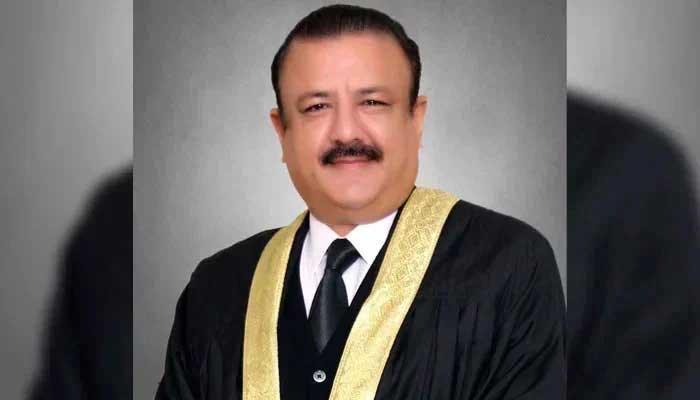
The Islamabad High Court has dismissed an objection raised by Tariq Mehmood Jahangiri against the constitution of a divisional bench and the inclusion of Sarfraz Dogar in it, ruling that the objection carried no legal force.
In a written order issued on Tuesday, the court said that given the sensitive nature of allegations regarding an allegedly invalid or fake degree against a sitting judge, it was appropriate and in the interest of justice to constitute a divisional bench rather than a single bench to hear the matter.
The order stated that the formation of benches is the sole prerogative of the chief justice and noted that this was not the first instance in which a divisional bench had been constituted to hear a specific petition. The court therefore rejected the objection raised by Jahangiri regarding the bench’s composition.
The order followed arguments made a day earlier, when Jahangiri opposed the divisional bench during the hearing of a petition filed by Advocate Mian Dawood, contending that a quo warranto petition is traditionally heard by a single bench.
The case relates to a controversy surrounding Jahangiri’s LLB degree, which was cancelled by the University of Karachi. According to a university notification dated September 25, the syndicate, in its meeting held on August 31, 2024, approved a resolution upholding the recommendation of the Unfair Means Committee, in line with the decision of the competent authority.
Jahangiri had also objected to Dogar’s presence on the bench, citing an alleged conflict of interest on the grounds that he had filed a petition against him. He expressed a lack of confidence in the bench and requested that the case be assigned to another bench.
Read More: Pakistan targets March 2026 5G launch, PTA issues security guidelines
The high court rejected this objection as well, noting that the petition filed by Jahangiri against Dogar had already been dismissed by the Federal Constitutional Court.
Referring to the Supreme Court’s judgment in Asif Ali Zardari versus The State, the court observed that a judge is the keeper of his own conscience and it is for the judge concerned to decide whether to hear or recuse from a matter.
Given the peculiar nature of the case, the court also granted the Islamabad District Bar Association, the Islamabad High Court Bar Association and the Islamabad Bar Council the right of audience.