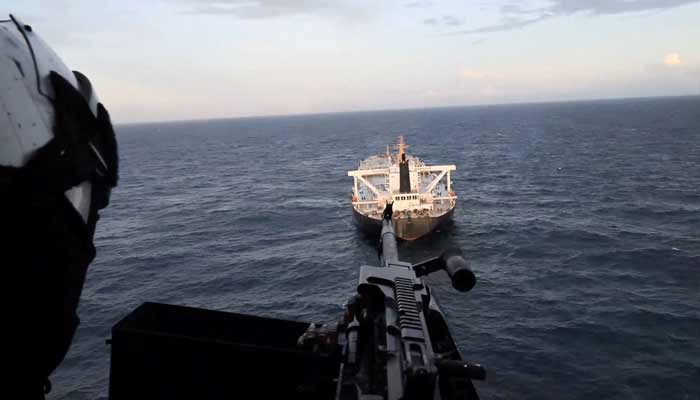
The first tankers carrying Iranian crude oil have exited the US naval blockade in the Strait of Hormuz, according to a shipping tracking service, as the United States and Iran prepare to begin negotiations on a final peace agreement later this week.
TankerTrackers, which monitors global oil shipments using satellite imagery and digital tracking data, said at least three Iranian oil tankers had left the blockade zone carrying a combined total of approximately 4.8 million barrels of crude oil.
According to the monitoring service, two National Iranian Tanker Company supertankers, Diona and Hero2, transported around 3.8 million barrels of crude, while a third tanker, Suezmax, departed with an additional one million barrels.
The development comes two days before US and Iranian negotiators are scheduled to begin talks at the Burgenstock resort in Switzerland following the signing of a framework agreement aimed at ending months of conflict.
Officials said negotiations during a 60-day period will focus on reaching a comprehensive settlement covering Iran’s nuclear programme, the lifting of international sanctions and broader regional security issues.
According to a report by the Wall Street Journal, the United States will immediately permit Iran to resume oil exports after the agreement is signed through sanctions waivers covering oil sales as well as banking, transportation and insurance services.
The prospect of the Strait of Hormuz reopening contributed to a sharp decline in global oil prices, with Brent crude falling to around $78.74 per barrel and US West Texas Intermediate trading near $75.85 per barrel.
Despite optimism surrounding the diplomatic process, tensions remained high after Israeli forces carried out fresh strikes in southern Lebanon. Iran’s military warned Israel of a “harsh response” following the attacks, while Lebanese media reported casualties in targeted areas.
Iranian Foreign Minister Abbas Araghchi confirmed that negotiations with the United States would begin after the signing ceremony and said discussions would address the country’s nuclear programme and the removal of sanctions.
He cautioned, however, that Iran remained mindful of previous agreements that had failed, saying the country’s leadership remained aware of a history of broken commitments.
US Vice President JD Vance said no American taxpayer funds would be provided to Iran under the proposed agreement and indicated that international nuclear inspectors would be permitted to enter the country as part of future arrangements.
The framework agreement is expected to serve as the basis for negotiations rather than a final settlement, with officials from both countries working over the next two months to resolve outstanding disputes.
Analysts have warned that continuing hostilities between Israel and Iran-backed Hezbollah in Lebanon remain a significant risk to the diplomatic process and could complicate efforts to achieve a lasting regional agreement.