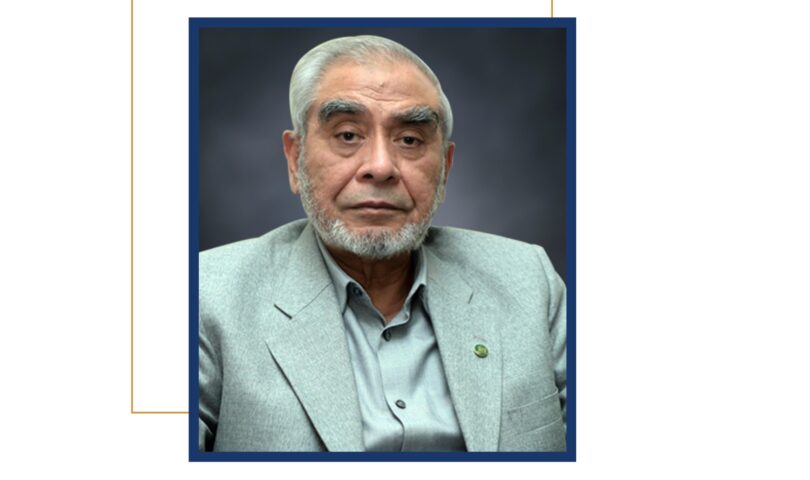
ISLAMABAD: Prof Dr Anis Ahmad, Vice Chancellor of Riphah International University, is known for his forward-thinking approach to higher education. In an exclusive interview, Dr. Anis discussed the unique challenges facing universities today, the importance of visionary leadership, and the need for a renewed focus on global cooperation and inculcation of Islamic ethical values in higher education.
Speaking to this scribe, Prof Dr Anis said that the educational sector is undergoing a massive transformation. He emphasized the growing importance of nurturing human creativity. He said the future of education isn’t just about rote learning; it’s about encouraging critical thinking, creativity, and problem-solving.
He pointed out that universities need to adapt to the changing needs of society, focusing on the development of creative leaders who are capable of navigating the complexities of the modern world.
Dr. Anis also expressed concern over the lack of visionary leadership in many educational institutions today. “The leadership in universities must go beyond traditional models and focus on selfless leadership. Leaders today must be willing to serve their communities without seeking publicity or praise,” he added.
He said that in a rapidly globalizing world, the emphasis should be on building bridges between nations through educational exchange programs, joint research, and cooperative projects. This cooperation, according to Dr. Anis, can help resolve global issues such as climate change, technological advances, and cultural understanding, ensuring that youth and academia work together to address challenges beyond borders.
Dr Anis mentioned that many educational systems are still tied to a Eurocentric epistemology that limits broader perspectives. “We must rethink our approaches and recognize that there are diverse ways of knowing and learning that go beyond the western paradigm,” he stated. This is crucial in ensuring that all students, regardless of background, have equal access to opportunities that allow them to thrive in a diverse world.
In discussing artificial intelligence (AI), Dr. Anis acknowledged its growing role in education and society. He explained that while AI has the potential to revolutionize various industries, it also presents challenges. “AI is capable of performing tasks that were once reserved for humans, but it must be used ethically,” he said. He emphasized the importance of developing ethical frameworks for AI applications, particularly in the education sector.
Furthermore, Dr. Anis highlighted the importance of AI and machine learning in improving data analysis, personalized education, and student performance tracking. “However, we must be cautious about over-reliance on AI. Human interaction and guidance are essential to the learning process, and technology should only be a tool to support, not replace, the role of educators,” he added.
One of the major challenges Dr. Anis identified in leadership is the hunger for self-praise and publicity. “Many leaders are more focused on recognition than on the actual work of serving their communities. This is particularly concerning in educational settings, where the focus should be on the students and their development,” he explained. He believes that true leadership must be grounded in humility, with leaders dedicated to making a real difference.
Dr. Anis emphasized the importance of developing the next generation of leaders—individuals who are not just academically proficient but also socially and emotionally intelligent. He pointed out that young people need to be equipped with the skills to navigate an increasingly complex world, one that is shaped by rapid technological changes and evolving global dynamics.
“We cannot afford to focus only on academic excellence. We must instill in our youth the values of responsibility, ethics, and global citizenship; At Riphah, we focus on Islamic ethical values and anyone following such values must also become a good citizen as a result of it,” he said. “Education is not just about securing jobs; it’s about preparing individuals to lead meaningful lives and contribute to society.”
Dr. Anis’ vision for the future of education is both optimistic and realistic. As he looks toward the future of Riphah International University and beyond, he remains committed to the idea of collaborative, ethical leadership that addresses the challenges of today while preparing the leaders of tomorrow.
Dr. Anis Ahmad’s perspective sheds light on the urgent need for leadership reform in educational institutions and the importance of promoting global cooperation and promoting Islamic ethical values.