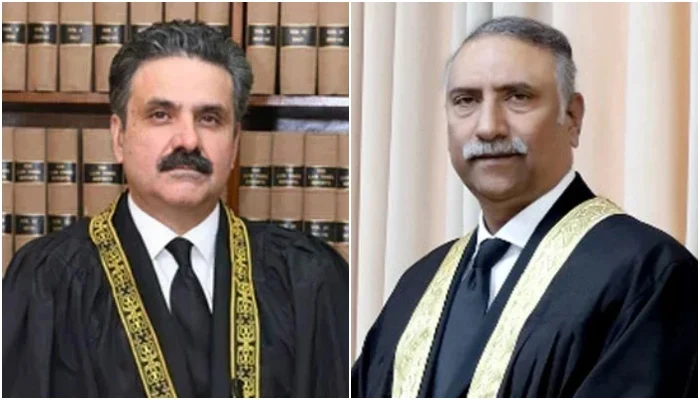
ISLAMABAD: Chief Justice of Pakistan Yahya Afridi has rejected a request by Islamabad High Court Chief Justice Sarfraz Dogar to convene a Judicial Commission meeting regarding the transfer of judges, citing constitutional and institutional concerns.
In a written response, the chief justice said calling a commission meeting for a specific purpose was not permissible and stressed that no valid institutional need had been presented for the proposed transfers.
He warned that transferring judges without clear justification could amount to “punishment” and would pose a serious threat to judicial independence and autonomy.
The chief justice further noted that such a move could disturb the federal balance, particularly by affecting provincial representation in the Islamabad High Court. He said recalling judges from Sindh would create constitutional and administrative complications.
He also cautioned that transferring five out of nine judges could disrupt the functioning of the Islamabad High Court and create uncertainty due to resulting vacancies.
Referring to constitutional provisions, Afridi said that Article 209 provides a clear mechanism for addressing issues related to judges, and that administrative transfers would not align with constitutional procedures.
He added that treating judges as transferable administrative officers would set a “dangerous precedent” and could undermine public confidence in the judiciary.
The chief justice clarified that the secretary of the Judicial Commission is authorised to convene meetings and directed that any request must include proper justification shared with all members.
The development highlights ongoing institutional sensitivities regarding judicial appointments, transfers, and the balance of authority within Pakistan’s higher judiciary.