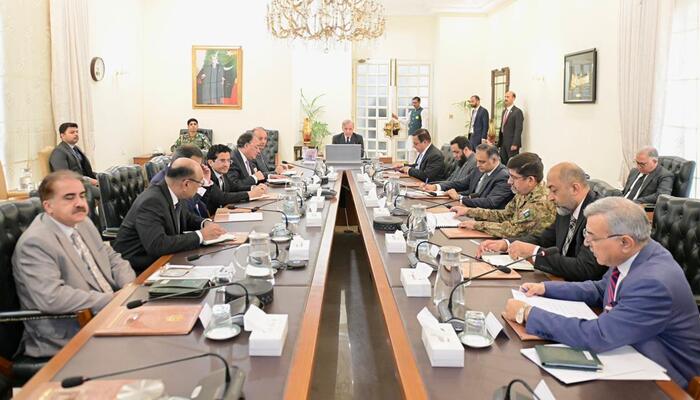
Prime Minister Shehbaz Sharif on Thursday termed energy security a critical component of Pakistan’s future planning, saying timely government measures had helped avert a potential crisis amid the current regional situation.
Chairing a high-level meeting on energy security, the prime minister said work was underway on a plan to maintain strategic reserves of crude oil in line with future national requirements.
He emphasised the need for energy conservation and sustainable development, directing a gradual transition towards eco-friendly electric vehicles (EVs) across the country.
The prime minister instructed that only electric buses and motorcycles be procured for government use in the future and called for accelerating the establishment of EV charging infrastructure.
He also directed authorities to formulate a strategy to facilitate battery acquisition for storing surplus solar energy, while encouraging local manufacturing of high-quality storage batteries.
During the briefing, officials informed the meeting that the National Coordination and Management Council is reviewing the energy situation on a daily basis.
Participants were told that sufficient petroleum stocks are available in the country and that the food security situation remains stable.
Officials added that local production of oil and gas is increasing due to continuous efforts by energy companies, while a PC-I is being prepared for two pilot projects focusing on grid-level battery storage.
The meeting was attended by several federal ministers, including Musadik Masood Malik, Ahad Khan Cheema, Muhammad Aurangzeb, Sardar Awais Leghari, Attaullah Tarar, Ali Pervez Malik, Ahsan Iqbal, along with senior officials.
Last month, the prime minister announced a series of austerity and fuel conservation measures, including a four-day workweek, early market closures, reduced fuel allowances, and a 20% cut in government expenditures.
These steps were taken to mitigate the impact of rising global energy prices amid ongoing tensions in the Middle East.
The conflict, which began on February 28 following joint US-Israeli strikes on Iran, escalated as Tehran responded by targeting US bases and restricting access to the Strait of Hormuz, a key global energy route.