Pakistan has welcomed the extension of the Iran ceasefire, expressing hope that ongoing diplomatic efforts in Islamabad will lead to a broader peace agreement.
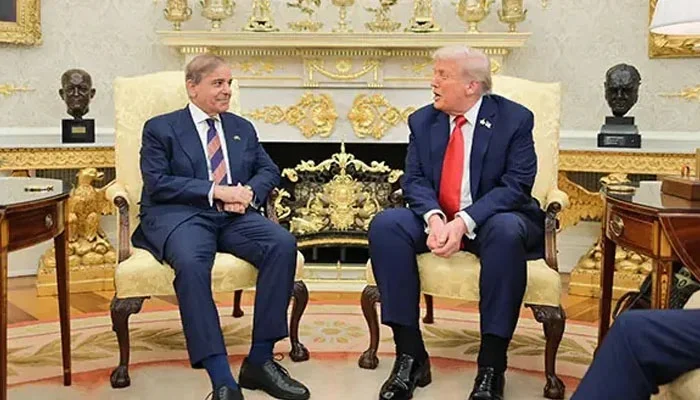
Prime Minister Shehbaz Sharif said the move came at Islamabad’s request and thanked US President Donald Trump for agreeing to extend the truce to allow negotiations to continue.
“On my personal behalf and on behalf of Field Marshal Asim Munir, I sincerely thank President Trump for graciously accepting our request,” the prime minister said in a post on X.
He reaffirmed Pakistan’s commitment to supporting a negotiated settlement, expressing confidence that the process would lead to positive outcomes.
Sharif said he hoped both sides would continue to observe the ceasefire and move towards a “comprehensive peace deal” during the second round of talks scheduled in Islamabad.
The extension was announced by President Trump just hours before the ceasefire was due to expire, stating that the decision was made at Pakistan’s request to allow diplomatic efforts to progress and give Tehran time to prepare a unified proposal.
According to Trump, the ceasefire will remain in place until Iran submits its proposal and discussions are concluded, while US forces will remain on standby and maintain pressure, including a naval blockade of Iranian ports.
The development comes as Islamabad prepares to host a second round of talks between the United States and Iran. Washington has confirmed that a delegation led by Vice President JD Vance will travel to Pakistan, while Tehran has yet to confirm its participation.
Reports suggest the US delegation may also include Jared Kushner and Special Envoy Steve Witkoff. However, Iranian state media has denied claims that any delegation has departed for Pakistan.
The first round of talks, which lasted around 21 hours, ended without an agreement as both sides remained divided over Iran’s nuclear and ballistic missile programmes, the Strait of Hormuz, and US sanctions.
The conflict began on February 28 following a joint US-Israeli bombing campaign against Iran, escalating into wider hostilities across the region.
The initial ceasefire was brokered on April 8 through Pakistan’s mediation, with Islamabad also inviting both sides for dialogue.
Earlier, Pakistan had urged both countries to extend the ceasefire, emphasising dialogue and diplomacy as the only viable path forward.
Deputy Prime Minister Ishaq Dar made the call during a meeting with Natalie A Baker, the US Charge d’Affaires, according to the Foreign Office.
Separately, Information Minister Attaullah Tarar said Pakistan remains in contact with Iran and continues efforts to facilitate dialogue.
He noted that confirmation from Tehran regarding participation in the Islamabad talks is still awaited, adding that Pakistan will continue its efforts to bring both sides to the negotiating table.