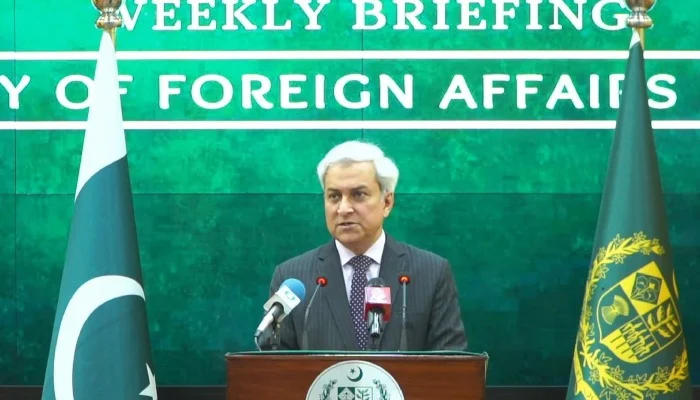
ISLAMABAD: Pakistan on Thursday urged the media to refrain from speculation regarding the schedule of the second round of talks between the United States and Iran, saying no official timeline has been announced yet.
Addressing a weekly briefing, Foreign Office spokesperson Tahir Hussain Andarabi declined to share details of diplomatic engagements, stressing the importance of confidentiality and trust in ongoing negotiations.
He said both sides remain willing to engage and that dialogue is continuing, adding that details regarding delegations and participation are internal matters of the concerned parties.
His remarks came amid reports that US and Iranian delegations could return to Islamabad later this week, following the first round of high-level talks that ended without a formal agreement.
Earlier, Donald Trump had indicated that negotiations could resume within days, saying Washington was inclined to return to Pakistan for further discussions.
The initial meeting in Islamabad marked the first direct engagement between the two countries in more than a decade and the highest-level contact since the Iranian Revolution.
The talks, which lasted nearly 21 hours, focused on key issues including the Strait of Hormuz, Iran’s nuclear programme, and international sanctions on Tehran. Despite extensive discussions, no agreement was reached.
Describing the outcome, Andarabi said the negotiations were “serious and constructive,” noting that there was neither a breakthrough nor a breakdown. He added that the prolonged engagement reflected the commitment of both sides to finding a resolution.
He termed the talks “historic in significance” and appreciated the role of leadership from all parties involved, as well as mediators facilitating the dialogue.
The spokesperson said Pakistan would continue to act as a facilitator, maintaining communication channels between Tehran and Washington as part of an ongoing diplomatic process.
He added that Islamabad has remained in contact with global leaders and will continue engaging international partners, welcoming support from countries including Russia.
Highlighting broader diplomatic efforts, he said Pakistan has actively participated in the Shanghai Cooperation Organisation platform and hosted meetings involving officials from Saudi Arabia, Turkiye and Egypt.
He also confirmed that Asim Munir is currently in Iran as part of ongoing diplomatic engagements.
On the regional situation, the spokesperson strongly condemned Israeli attacks in Lebanon and called for an immediate ceasefire, saying peace in Lebanon is essential for broader regional stability.
He noted that recent signs of de-escalation in the Israel-Lebanon conflict were encouraging and could help create a conducive environment for dialogue.
The broader conflict began on February 28 following US-Israeli strikes on Iran, leading to widespread escalation across the region, including clashes involving Hezbollah and significant humanitarian impact in Lebanon.