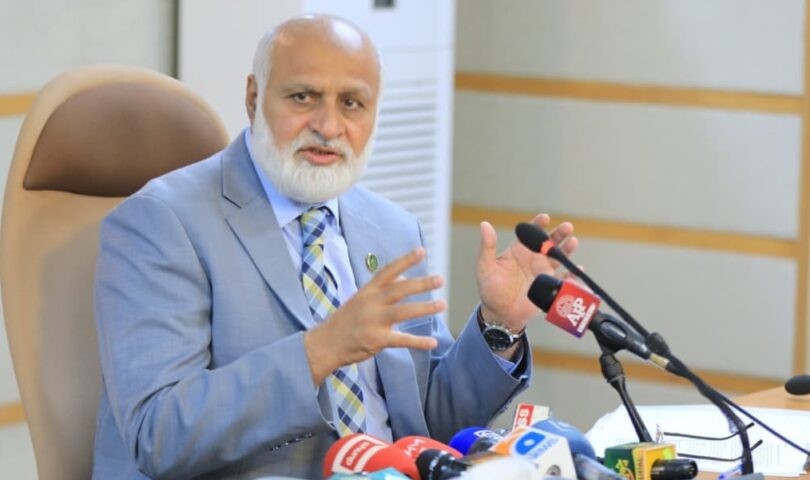
ISLAMABAD: Chairman of the Higher Education Commission, Prof. Dr. Niaz Ahmad Akhtar, on Wednesday announced a series of major reforms aimed at modernising Pakistan’s higher education sector and aligning it with national priorities and global trends.
Addressing a media briefing in Islamabad, the HEC chairman said the commission has introduced a mandatory three-credit-hour course on Artificial Intelligence for all undergraduate programmes across universities in the country.
He said the initiative is aimed at equipping students from all academic disciplines with basic knowledge of emerging technologies and preparing graduates for the evolving demands of the digital economy.
Akhtar said HEC has also established a Committee for Outcome-Based Education (OBE) to develop recommendations for making university education more purposeful, productive and result-oriented. The committee will focus on curriculum design, clearly defined learning outcomes and improved assessment practices.
He further announced the formation of another committee to strengthen Offices of Research, Innovation and Commercialization (ORICs) in universities. The body will review existing mechanisms and propose measures to improve research management, enhance collaboration between academia and industry, and promote intellectual property generation and commercialisation of research outcomes.
Highlighting digital transformation initiatives, the chairman said HEC will soon shift the attestation of academic documents from a physical process to a fully online system.
“Once implemented, applicants will no longer need to visit HEC offices in person as the entire process will be completed digitally,” he said.
To improve Pakistan’s presence in global academia, the commission has also constituted a ranking committee to guide universities on strategies for improving their performance in international rankings, including the QS World University Rankings and the Times Higher Education World University Rankings.
Akhtar said provincial committees on higher education reforms have also been formed to strengthen coordination between federal and provincial authorities. Each committee will include representatives from provincial higher education commissions, higher education departments, a female vice chancellor, a vice chancellor from the private sector and a representative from HEC.
He said the initiative is expected to enhance coordination, avoid duplication of efforts and promote mutual institutional support.
The HEC chairman also announced the establishment of the P-5 strategic consortium aimed at strengthening emerging engineering and technology universities and enabling them to become global leaders through collaborative innovation and sustained engagement.
Sector-specific academic committees have also been formed to review the quality and relevance of degree programmes in key disciplines, including engineering and technology, medical education and agriculture. These bodies will assess existing programmes and propose improvements in line with international standards and national development needs.
Emphasising the importance of merit-based admissions, Akhtar said HEC is working to improve undergraduate testing mechanisms to ensure greater transparency, standardisation and fairness in the admission process across universities.
“The quality of a university’s intake ultimately determines the quality of its graduates,” he said.
The chairman also revealed that he has written to the speaker of the National Assembly and the chairman of the Senate, requesting that legislation for the establishment of new universities should not be passed without obtaining a No Objection Certificate from HEC to avoid regulatory and operational challenges.
He added that universities have also been urged to fill vacant administrative positions as early as possible to ensure effective governance and smooth academic operations.
Regarding the government’s laptop scheme, Akhtar said 65,000 laptops have already been distributed among students under the ongoing phase of the programme, while the remaining devices will be distributed soon.
He reaffirmed HEC’s commitment to strengthening applied research and promoting entrepreneurship within universities, stressing the need to transform academic research into practical solutions, innovative products and economic opportunities for the country.
The chairman expressed confidence that the new initiatives will help Pakistan’s universities better support national development and compete more effectively in the global knowledge economy.