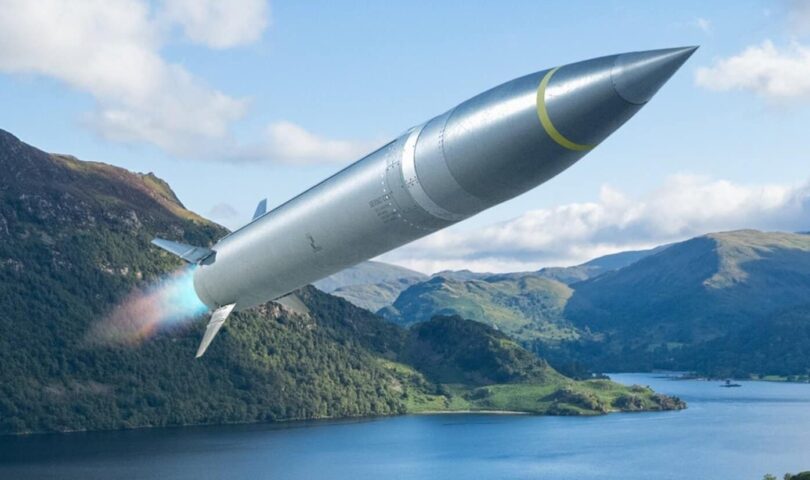
As missiles fly over Iran and the spectre of a wider Middle Eastern war looms, Pakistan is not merely an observer of history, it is simultaneously managing a live conflict on its own western frontier. The recent Pakistan–Afghanistan tensions have reinforced a hard-learned national lesson: in the 21st century, wars are not won by firepower alone; they are contained, shaped and survived through doctrine.
This is the prism through which Islamabad views the US–Israel–Iran confrontation.
Two Frontlines, One Strategic Reality
While Tehran exchanges strikes with technologically superior adversaries, Pakistan has been conducting calibrated, intelligence-driven operations against terrorist sanctuaries across the Afghan border. The message in both theatres is similar: the era of ungoverned spaces and proxy warfare is ending.
Pakistan’s response to cross-border militancy in recent months has been:
precise, time-bound
target-specific
politically communicated
strategically restrained
This is not accidental. It reflects a doctrine designed to deny space to non-state actors without sliding into a prolonged conventional war.
In contrast to the chaos that has defined many regional conflicts, Pakistan’s actions signal a shift from reactive security to structured deterrence on the western front.
Iran’s Retaliation and the Limits of Power
Iran has shown that it cannot be neutralised in a single blow. Its surviving missile inventory, underground infrastructure and ability to regenerate capabilities ensure that it can continue to impose costs on its adversaries.
But its challenge mirrors the one every state in conflict faces: sustainability.
A prolonged high-intensity war requires:
economic resilience
internal political cohesion
secure supply chains
dependable alliances
Without these, even the most ideologically motivated state faces strategic exhaustion.
Pakistan understands this equation because it has lived it through sanctions, wars, hybrid threats, and economic pressure.
Pakistan’s Western Front: A Case Study in Modern Conflict Management
The recent escalation with the Afghan Taliban regime is not a conventional war; it is a controlled enforcement of red lines.
Islamabad’s position has been clear:
There is no tolerance for terrorist sanctuaries
No acceptance of cross-border attacks
No interest in occupying territory or destabilising Afghanistan
This reflects a mature doctrine:
force for compellence, not force for conquest.
In strategic terms, Pakistan is signalling three things:
1. Deterrence applies on both eastern and western fronts.
2. Non-state actors will not be allowed strategic space.
3. Escalation will remain calibrated and limited.
This is precisely what distinguishes doctrinal states from reactive ones.
The Core of Pakistan’s Strategic Thought
Pakistan’s national security framework rests on an integrated model:
Credible Minimum Deterrence
Prevent large-scale war by making it irrational.
Full-Spectrum Deterrence
Deny the adversary space at every level, conventional, sub-conventional, and hybrid.
Geo-Economic Stabilisation
Link security to connectivity, trade, and regional integration through CPEC and Gulf partnerships.
Internal Cohesion
Recognise that no external war can be managed without domestic stability.
These principles explain why Pakistan, despite continuous security challenges, has avoided prolonged open wars in recent decades.
Why This Matters for the Muslim World
The Iran crisis and the Pakistan–Afghanistan tensions together highlight a painful truth: the greatest strategic vulnerability of the Muslim world has not been military weakness, it has been the absence of unified doctrine.
Where doctrine exists, the state survives.
Where it does not, conflicts become endless.
Pakistan’s call for:
dialogue
respect for sovereignty
de-escalation
is not diplomatic rhetoric. It is rooted in national experience.
Regime-collapse models in Iraq, Libya, and Syria produced neither democracy nor stability — only power vacuums and humanitarian disasters.
A similar trajectory in Iran would not remain confined to its borders. It would send shockwaves across:
the Gulf (where millions of Pakistanis work)
global energy markets
regional connectivity projects
A Region at a Strategic Crossroads
From Torkham to the Strait of Hormuz, the map is telling the same story:
Missiles can shape battles.
Doctrine decides outcomes.
Iran can continue to retaliate in phases.
Israel can escalate with superior technology.
The United States can project overwhelming force.
But none of these guarantees long-term stability.
Only a framework based on deterrence, economic interdependence, and political cohesion can do that.
Pakistan’s Emerging Role
Pakistan today is not just reacting to crises, it is demonstrating a model:
controlled use of force
strategic signalling
diplomatic engagement
refusal to enter open-ended wars
Its handling of the Afghan frontier and its consistent position on the Iran crisis reflect the same principle:
security through stability, not perpetual conflict.
The Final Strategic Lesson
The most dangerous wars are not those that begin with missiles, they are those fought without doctrine.
Pakistan’s history has turned that doctrine into a necessity.
The Middle East is now discovering why it is indispensable.