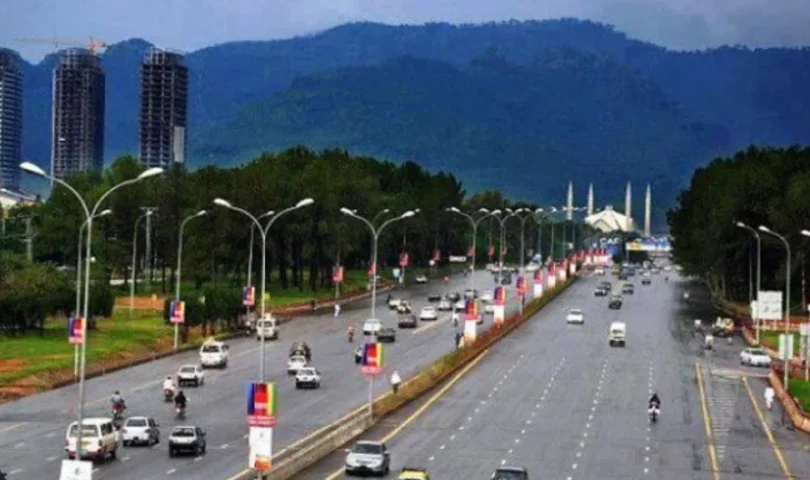
The recent suicide attack in Islamabad in which the bomber reportedly reached the judicial complex using an online bike service has pushed authorities to suddenly impose strict rules on bike-riding apps. Registration of riders has now been declared mandatory, and surveys are being carried out in Islamabad and Rawalpindi to identify unregistered riders.
But this sudden action raises an important question: Why were these rules not enforced earlier? Online bike riders have been moving freely across the capital for years. Authorities never checked their licences, number plates, or bike documents. Traffic police watched thousands of riders pass by daily many without helmets or registration yet no action was taken. Must we always wait for a tragedy before enforcing basic rules?
This weakness at the very first point of control is not new. Pakistan has seen similar failures before. In the 2023 Peshawar Police Lines mosque attack, the terrorist walked in wearing a police uniform and the officer on duty simply assumed a uniform meant no checking. That single mistake cost dozens of lives.
The same pattern appears again and again. A clear example is the tragic death of Religious Affairs Minister Mufti Abdul Shakoor in April 2023. After the accident, it was revealed that the driver of the vehicle involved had been fined 13 times by Islamabad Traffic Police for overspeeding. The question is simple: If a driver has been caught speeding 13 times, why is he still freely driving on the road? Any responsible traffic system would suspend his licence long before the 14th chance. But in Islamabad, he kept driving and on his 14th time, he killed a federal minister. Once again, the system woke up only after a life was lost.
These failures are visible daily on the streets of Islamabad. Just a few days ago in F-6, even a police officer was seen riding a bike without a helmet and without a number plate. If an ordinary citizen can see this violation, why can’t the traffic police? Why is that officer not held accountable?
The situation is worse in Bhara Kahu’s Athal Chowk, where traffic rules appear meaningless. Civilians and even police officers break the one-way rule daily while officers stand and watch. Heavy vehicles overspeed, causing accidents, yet no one stops them. Trucks drive slowly in fast lanes, creating long lines of traffic, but no officer guides them to the correct lane or issues a fine.
Parking rules are equally confusing. People regularly park near Marriott Hotel, Evacuee Trust, or FPSC without any problem. But on some days, traffic police suddenly lift cars, place them on the green belt, and fine the owners Rs. 2,000 before returning the vehicles. Citizens struggle to understand this “sometimes allowed, sometimes punished” system. There should be one clear rule: either parking is allowed or it is not.
Even pedestrian movement is mishandled. Sometimes the main gate outside Marriott is closed for security which is acceptable but police also block the small gate, forcing pedestrians to walk long distances to reach the same place. Such decisions make no sense and only create frustration for the public.
These are basic, simple traffic-management practices that are followed in every organised city in the world. Yet in the federal capital, they are repeatedly ignored.
All of this points to a single conclusion: Pakistan does not need new laws Pakistan needs the enforcement of existing laws. When enforcement fails, security fails. Whether it is bikers, truck drivers, habitual overspeeders, or people in uniform, every person on the road must follow the law every single day, without exceptions.
Until that happens, tragedies will continue to occur first and regulations will continue to come later.
About the Author:
Rashid Dar is an HR professional and social reform enthusiast who has been writing on governance, defense, and institutional development for the past 17 years.