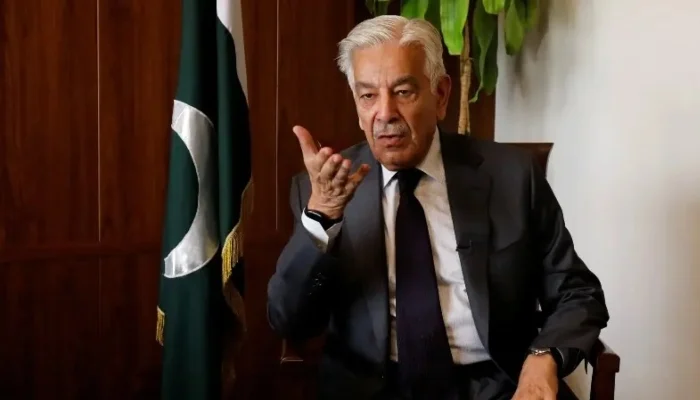
ISLAMABAD: Defence Minister Khawaja Asif has warned that any Houthi aggression against Saudi Arabia could trigger the Makkah Defence Alliance, saying Pakistan is bound by the terms of the trilateral defence agreement with Saudi Arabia and Turkiye.
Speaking on Geo News programme “Aaj Shahzeb Khanzada Kay Saath” on Tuesday, Asif said the agreement clearly stipulated that aggression against any one of the three countries would be considered aggression against all.
“Under the trilateral agreement, any aggression against any of the three is regarded as an aggression against all. There is no ambiguity about that,” the defence minister said.
His remarks came after Houthi forces launched attacks on several Saudi cities on Tuesday, leaving at least 71 people injured and further raising concerns over the spread of conflict across the Middle East.
Prime Minister Shehbaz Sharif condemned the attacks, describing them as a “cowardly” act that endangered innocent lives and threatened regional peace and security.
The prime minister reaffirmed Pakistan’s steadfast support for Saudi Arabia’s sovereignty, security and territorial integrity.
‘Alliance will definitely be operationalised’
Asif said any unprovoked aggression or spillover of the conflict from Yemen into Saudi Arabia would “definitely” operationalise the Makkah Defence Alliance.
“There should be no doubt about it. We are bound by the terms and conditions of this pact, and we will honour them in case there is a need,” he said.
The defence minister, however, expressed hope that the situation would be brought under control and eventually subside.
The trilateral agreement between Pakistan, Saudi Arabia and Turkiye was signed on August 7 and provides for collective security and defence cooperation among the three countries.
The pact was signed amid heightened tensions in the Middle East following the conflict that began on February 28, when the United States and Israel launched joint strikes against Iran and targeted its senior leadership.
Pakistan’s mediation efforts continue
Discussing Pakistan’s diplomatic efforts to ease tensions between the United States and Iran, Asif said Islamabad’s efforts to facilitate peace were still continuing.
He said Pakistan wanted an environment conducive to reducing tensions and maintaining regional stability.
“There are contacts, even if they are indirect,” Asif said, indicating that communication between the two sides remained possible through diplomatic channels.
Pakistan emerged as a key mediator between Washington and Tehran and, according to the account presented by Pakistani officials, achieved a major diplomatic breakthrough on June 15 when the two sides signed a memorandum of understanding aimed at advancing peace in the region.
Islamabad has since continued efforts to facilitate communication between the two sides and promote dialogue, de-escalation and a peaceful resolution of their differences.
‘Peace will be established in region’
Asif said Israel would prefer the Iran-US conflict to continue but expressed optimism that growing international pressure could contribute to ending the confrontation.
“Peace will be established in the region and Israel will have to pay a price,” the defence minister said.
His comments came as Pakistan continued to balance its security commitments with diplomatic efforts aimed at preventing the widening regional conflict from threatening the sovereignty and security of neighbouring countries, particularly Saudi Arabia.