WEB DESK: Iran and the United States exchanged intensified attacks on Thursday as a week-long escalation further weakened last month’s ceasefire arrangement, while Tehran’s release of a US citizen was viewed as a possible signal that diplomatic channels could still prevent a return to a full-scale conflict.
For the first time since a memorandum of understanding paused hostilities last month, the United States carried out two major waves of air strikes in a single day on Wednesday, targeting locations mainly along Iran’s southern coastline.
Iran responded with missile and drone attacks against US military facilities in neighbouring countries, including a large-scale strike on a recently expanded air base in Jordan.
The renewed clashes have tested the limits of escalation maintained by both sides during four months of fighting before last month’s truce. However, US President Donald Trump described the release of an American citizen from Iran as a “gesture of goodwill”, raising hopes that backchannel diplomacy may continue.
Human rights lawyer Jared Genser identified the released US citizen as Dena Karari, claiming she had been detained in Iran since December 2024 on what he described as “bogus charges” and was now returning safely to the United States. Iranian authorities have not issued any statement regarding the case.
Over the years, the release of US citizens detained in Iran has often involved indirect negotiations despite the absence of formal diplomatic relations between Washington and Tehran.
Strait of Hormuz crisis intensifies
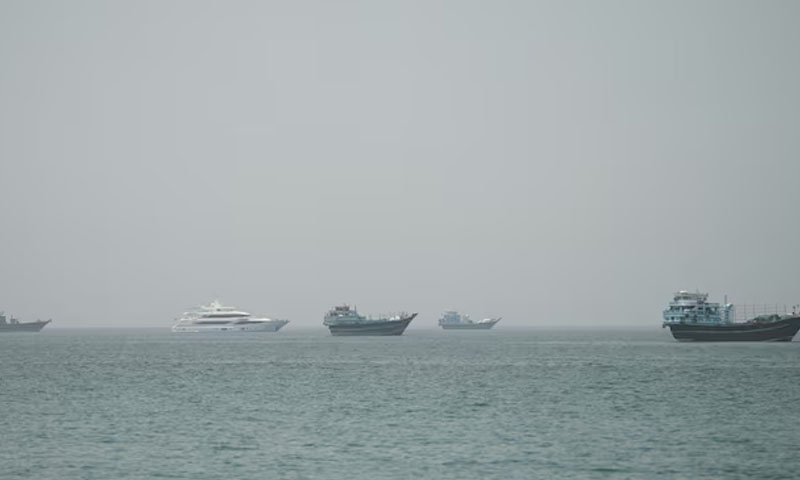
The latest escalation has once again severely disrupted shipping activity through the Strait of Hormuz, one of the world’s most important routes for oil and gas transportation, pushing global energy prices higher.
However, prices remain below previous wartime peaks, indicating that financial markets expect the crisis could eventually be contained.
Iran triggered the latest confrontation last week by targeting vessels travelling through a corridor in the strait outside its control, including a drone strike that caused a major fire aboard a Qatari liquefied natural gas tanker.
Iranian officials have indicated that Tehran seeks to establish greater authority over shipping routes through the Strait of Hormuz, while also pursuing a system of charging fees for vessels passing through the waterway.
Despite escalating rhetoric, Iranian sources said Tehran does not want a broader conflict that could derail the June memorandum of understanding, which Iran believes achieved several of its key objectives.
US President Donald Trump, however, has declared that the ceasefire agreement is no longer effective.
Iran warns against attacks on strategic waterway
Iran has insisted that ships using the Strait of Hormuz should operate through a channel close to its coastline and has warned that it intends to impose charges after the completion of a 60-day negotiation period under the previous agreement.
The United States has encouraged commercial vessels to use an alternative route near Oman and has reintroduced restrictions on Iranian ports.
The US military said it recently targeted an empty tanker near Iran’s Kharg Island after it ignored warnings, striking the vessel’s smokestack with Hellfire missiles.
Washington said its air operations were aimed at damaging Iranian military capabilities used to threaten maritime security, while Tehran maintained that its ability to influence the Strait of Hormuz does not depend only on coastal installations.
Iranian military spokesman Brigadier General Mohammad Akraminia said the United States could not gain control of the strategic waterway by targeting southern coastal bases.
He claimed Iran could maintain control of the strait from across its territory.
Threat of wider conflict remains
Three US officials told Reuters that recent strikes could also serve as preparations for potential future military operations by weakening Iranian capabilities.
President Trump has not ruled out deploying ground forces, including possible action against Kharg Island, Iran’s main oil export terminal. He has also warned of possible strikes on Iranian power plants and bridges if Tehran does not return to negotiations.
Iran warned that any attack on its infrastructure would trigger a broader response targeting regional facilities.
So far, Iran’s retaliatory operations have focused mainly on US military bases in neighbouring countries. Tehran said it targeted American facilities in Kuwait and Jordan, including a major air base in Jordan that has been expanded into a regional command centre.
Iranian authorities accused neighbouring countries of allowing their territory to be used for attacks against Iran and warned that such cooperation would not go unanswered.
The continued exchange of strikes has raised fears of a wider regional conflict, with diplomatic efforts now focused on preventing the collapse of the fragile ceasefire framework.